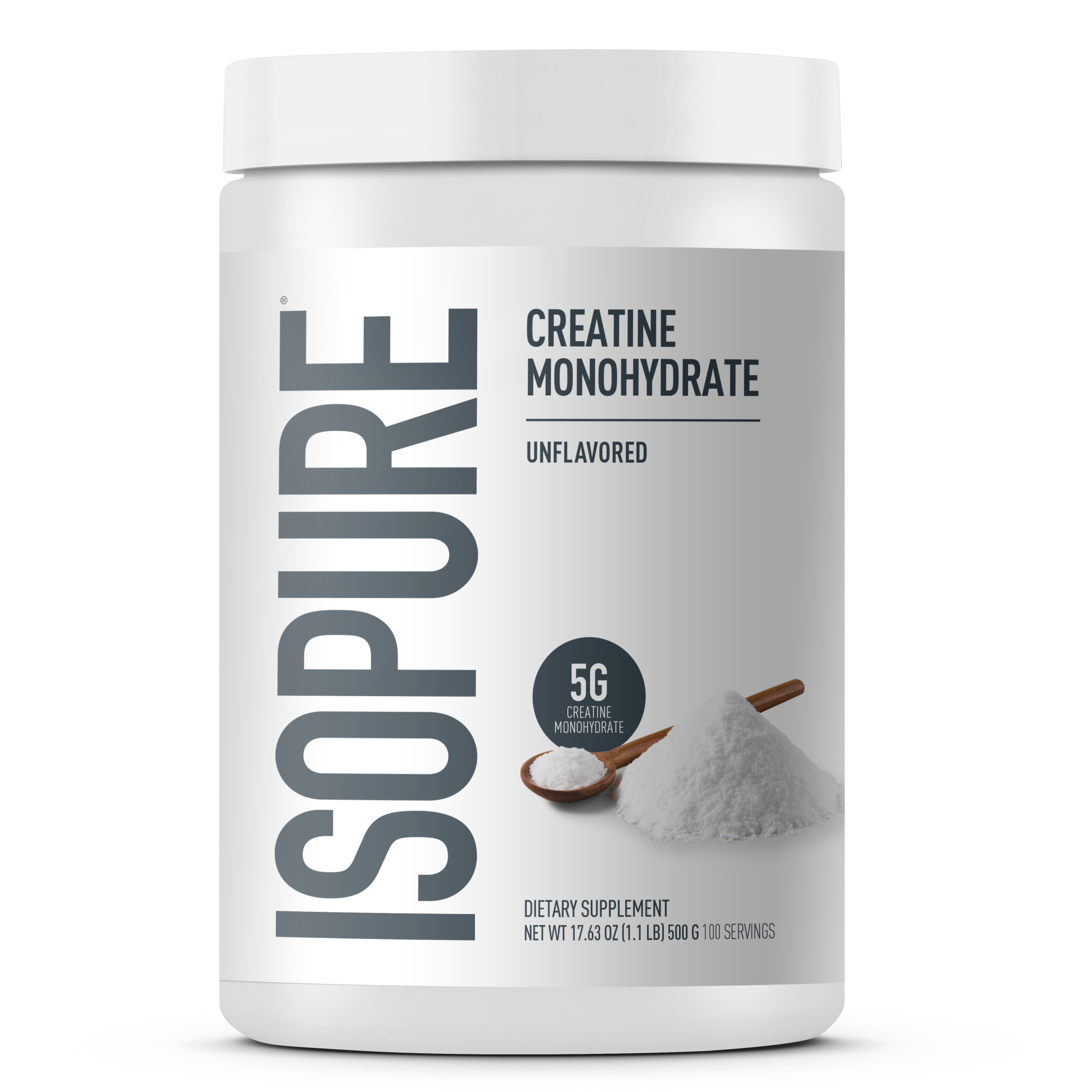
Creatine is one of the most researched and effective supplements for supporting high intensity performance, muscle growth, and overall training progress. If you are new to creatine, this guide walks through what creatine is, how it works in the body, how to start taking it, when to take it, and what realistic changes to expect over the first one to four months.
What Is Creatine?
Creatine is a naturally occurring compound made from the amino acids glycine, arginine, and methionine that your body produces in the liver, kidneys, and pancreas and stores mainly in skeletal muscle. It also comes from food sources like red meat, pork, and fish, though typical diets only provide about one to two grams per day, which is often not enough to fully saturate muscle stores, especially for active individuals or those following plant based diets.
Inside muscle cells, creatine is stored as phosphocreatine, which helps regenerate ATP, the primary energy source for short, powerful efforts like lifting, sprinting, and jumping. Supplementing with creatine increases phosphocreatine availability, allowing faster energy recycling, improved training capacity, and greater potential for strength and muscle gains over time.
How to Start Taking Creatine
Starting creatine is simple. Focus on daily consistency and staying well hydrated.
- Daily amount: Take 3 to 5 grams per day to help fully saturate muscle over time. Some individuals may do fine with 3 grams, but 5 grams is a reliable, easy target.
- Mixing and use: Creatine can be added to water, juice, protein shakes, or pre workout drinks. Taking creatine with meals or carbohydrates may slightly improve uptake, but consistency matters more than timing.
- Comfort and hydration: If mild stomach discomfort occurs, split servings and take with food. Drink enough fluids, as creatine increases water content inside muscle cells.
When to Take Creatine
Once you have established your daily intake, the next question is when to take it. Creatine works by gradually building up in muscle, so daily consistency matters more than exact timing. It can be taken either before or after workouts, with post workout being convenient alongside a meal or shake and pre workout working just as well. Creatine does not provide an immediate energy boost like caffeine, and its benefits develop over weeks as muscle stores increase, so the best approach is choosing a time you can take it consistently.
What to Expect Over 1–4 Months
Creatine-related changes occur steadily and depend on your training program, nutrition, sleep, and baseline fitness. Here’s a realistic timeline for beginners.
- Weeks 2–4: As muscle creatine stores increase, water shifts into muscle tissue. Therefore, you may see a small scale increase of about 1 to 3 pounds and notice fuller looking muscles. Also, short, high intensity performance and recovery between sets may improve slightly.
- Weeks 4–8: Strength and power gains become more noticeable if your training is progressive. Hypertrophy or muscle growth may increase, especially when paired with consistent protein intake, adequate calories, and a structured progressive training plan.
- Months 2–4: Performance stabilizes at a higher level. Expect greater training volume, improved work capacity during intense efforts, and possible new personal bests. Visible changes vary, but improved muscle fullness and endurance during resistance training are common.
If creatine use stops, muscle stores gradually decline over several weeks and performance benefits fade. Resuming consistent daily intake restores muscle stores and training performance over time.
Creatine Amount, Methods and Timelines
For beginners or those new to creatine, starting with daily maintenance intake is recommended. Taking 3 to 5 grams per day allows you to see how your body responds, build consistency, and achieve muscle saturation over time
| Method | Daily Dose | Duration | Time to Saturation | Best For |
| Daily Maintenance Only | 3–5 g/day | Ongoing | ~3–4 weeks | Simplicity, fewer amounts per day |
Tips to Maximize Results in the First 1–4 Months
- Be consistent: Take creatine every day, including rest days, since regular intake is what drives muscle saturation and results.
- Simplify habits: Pair creatine with a daily routine like a post workout shake to reduce missed intakes.
- Prioritize progressive training: Follow a structured program that gradually increases volume or intensity to fully benefit from creatine.
- Dial in nutrition: Consume adequate protein and enough calories to support your training and recovery goals.
- Hydrate well: Maintain proper fluid and electrolyte balance, especially during intense training or in environmental conditions.
- Support sleep and recovery: Quality sleep and effective recovery strategies help maximize performance benefits.
- Track key metrics: Monitor training performance and body weight weekly to identify progress and adjust as needed.
- Stay patient: Expect noticeable improvements as muscle stores saturate within about one week if loading or three to four weeks without loading, with continued gains over months two to four.
Frequently Asked Questions
-
Do I need to cycle creatine?
No. There’s no strong evidence that cycling provides additional benefits or reduces side effects. Regular daily use at 3 to 5 grams works well for most healthy adults.
That said, some people use creatine cycles to align with training phases - this is a preference rather than a necessity.
-
Will creatine cause bloating?
Creatine pulls water into muscle, which can slightly increase body weight and muscle fullness, but uncomfortable bloating is uncommon and can usually be reduced by staying hydrated or splitting intake. -
Is creatine safe long term?
Yes, for healthy adults. Research supports the long-term safety of creatine monohydrate in healthy adults at recommended amounts. -
Can I take creatine with caffeine?
Yes. Caffeine and creatine can be used together, as they work in different ways. -
What happens if I stop?
Muscle stores gradually decline over three to four weeks, and performance benefits fade, but return once daily intake resumes.
The Bottom Line
Creatine monohydrate is a proven, well studied supplement that supports strength, power, and muscle when paired with consistent training and adequate nutrition. Getting started is simple: take three to five grams daily, stay well hydrated, and follow a progressive training program. Over one to four months, many people experience improvements in strength, muscle fullness, recovery, and overall performance. For healthy adults, creatine remains one of the most practical and reliable tools to support long term training progress.